An essay written for submission to film magazines:
Richard Linklater and his filmography clearly express his curiosity about modern life, with many of his characters spiraling into lengthy soliloquies over societal standards, personal ambitions, and expectations, and the power memories have over decisions made. He looks at life through a magnifying glass, attempting to dissect any specific element of existence and philosophizing his findings across characters who are masked as being inquisitive.
Despite the lessons learned or obstacles faced in life as one grows up, time marches at the same pace, incapable of slowing down, pausing, or moving in the opposite direction. Luckily today film in many ways represents the closest thing humans have to time travel, letting us explore worlds that we know little about, and further understand how they compare to modern life.
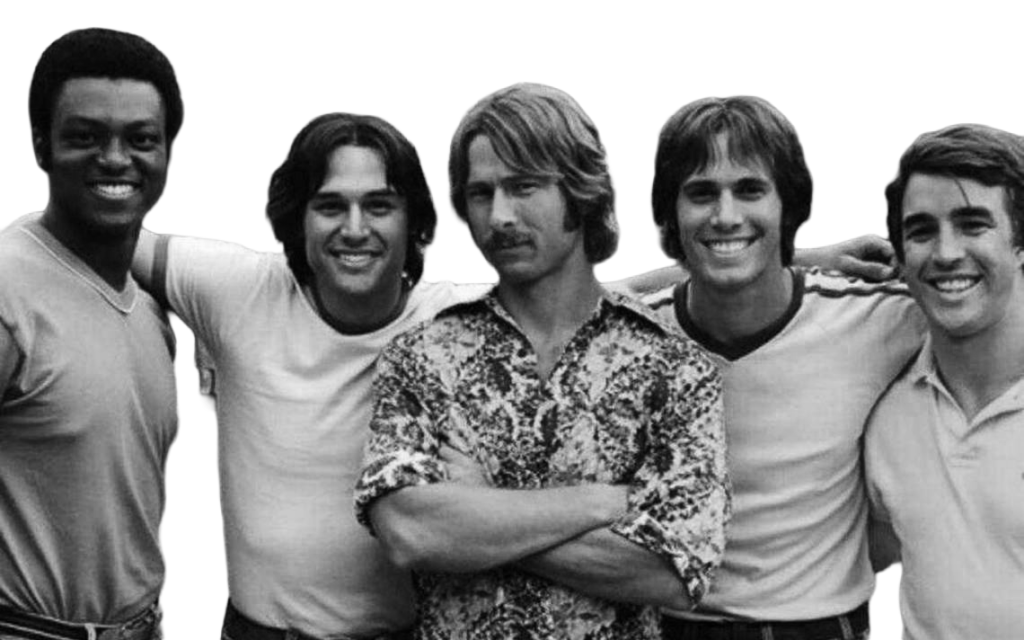
It is, in his 2016 period piece “Everybody Wants Some!!”, where Linklater time-travels back to Southeast Texas in 1980, presenting a romanticized weekend for a baseball team before the first day of college. A snapshot of a time when everyone’s life aspirations are firmly ahead of them. Whether it is a career in pro ball, life in the performing arts in New York City, or simply bringing a girl home from the disco, characters speak of what they want to do with their futures in this film, and Linklater attempts to showcase these desires through the sugarcoated and youthful vision of those who want to do so much in the world, and are starting to realize how they can go and do it.
The film opens with the lanky and handsome Jake Bradford (Blake Jenner) hitting the open road… windows down and music up. With The Knack’s “My Sharona” from 1979 playing as the credits roll, Linklater instantly communicates that this movie isn’t hoping to take itself too seriously, ready to commit to any needle drop necessary to always put it front and center that this is 1980. Combined with the shots of young women walking around campus, Linklater also immediately establishes the subject that is at the front of each character’s mind in this movie, sex. And oh boy, almost every character from the get-go makes it clear that everybody does certainly want some. Essentially every male character in the film centers their decision-making on the possibility of getting laid.
As Jake pulls up to his brand-new home for the year, Linklater includes an establishing shot of a disheveled, creaky house, as if it is a Polaroid straight from the time period. The audience understands Jake is going to share this house in the same way many college students do. As Jake walks in, he finds an ill-fitted water hose leaking as it snakes from the backyard, through the house, and up the stairs to the second story. Before any sort of hellos are exchanged, he is greeted with a series of expletives from guys who come running down the stairs in a hurry to turn the hose off. Turns out the waterbed being filled upstairs might crash through the ceiling.
With the disaster averted Jake eventually meets a couple of his teammates, who each have particular quirks that the audience can come to remember them by. There’s the outwardly congenial Finn (a fantastic Glen Powell), who regularly likes to express his societal observations as a way to pick up chicks and get a read on his teammates like any strong baseball player would. In almost every scene, Linklater writes extended dialogue of Finn trying to explain particular phenomena, ranging from superstition serving as a probabilistic framework falsely projecting meaning to the size of his penis.
Jake’s roommate Billy (Will Brittain), who the team has nicknamed “Beuter”, is an embodiment of a baseball pitcher, wearing his cowboy hat while making sure his dip saliva is properly collected in a plastic water bottle. Meanwhile, Willoughby (Wyatt Russell) is on the opposite end of the spectrum, a stoner who recorded every “Twilight Zone” episode on Betamax tapes. He is introduced to Jake and the audience while in the middle of reading Carl Sagan’s “Cosmos”.
Then there are McReynolds and Roper (Tyler Hoechlin and Ryan Guzman), the two upperclassmen who yelled at Jake. Clear leaders on the team, they have no interest in being buddies with the new freshman. McReynolds makes it clear that if Jake gets to know anything about him, it might give him an edge when they face each other in pro ball. However, it is what Dale (J. Quinton Johnson) tells Jake when they first meet that explains the heart behind having the same teammates as roommates. With some of the guys heading to the neighborhood bar, Jake initially politely declines to make sure he unpacks, but Dale won’t take that answer. “Bullshit, you’re on the team now,” he tells Jake as they both head downstairs on their way out. Dale is the only black member of the team, and it never is brought up by a teammate or mentioned specifically in the film, but it is clear that once you are on the team, you are one within the collective.
It’s the depiction of a baseball team that allows for that camaraderie to be immediately believable, where the appeal to the characters is relating one’s experiences with college friends to the ones on screen, even if they just met. No matter how much this film commits to the bit of jocks talking about girls, the testosterone-filled gasconade is deflected by the depictions of youth that any audience member can relate to. The rest of the film follows Jake getting a chance to mesh with his teammates, whether out drinking, hanging out in the house, or drinking in the house. Everyone knows what it is like to be amongst a group of friends and feel the bliss of simply being in each other’s presence. Most of this movie exists in this space, rejecting the need for a detailed plot for the embrace of engaging conversations over god-knows-what.
The romanticization of this era starts squarely at a location of tomfoolery and excessive commotion: the college frat house. In many ways a youthful wish is to spend every hour of your day around close friends, putting all those friends from adolescence under one roof. For those who get that experience, “Everybody Wants Some!!” expertly captures that nostalgia to give audiences the same dose of feeling that they might have holding a beer and sitting on a torn-up couch thinking about what bar is worth visiting that night.
And it is this nostalgia that prevents the bros-being-horny portions of the film from souring the experience. It seeks to present a representation of college that might not be exactly similar to viewers but can trigger the necessary memories that allow for an enjoyable viewing experience. In this case, it’s “My Sharona”, waterbeds, and Carl Sagan’s “Cosmos”, but those elements can be easily replaced by the specifics in the memories of those watching. Linklater even relies on music genres to convey the period, allowing the characters to jump from the disco to Cotton-eyed Joe at a country bar, to a punk show in three successive nights, broadening the picture of 1980 beyond what was already shown.
Linklater’s most intelligent decision in this film is to eliminate as many depictions of going to college as possible, as the film ends before the first lecture has a chance to start. There is no need for showing the adjustment to classes, the stress of exams, or semi-awkward intros freshmen seemingly have to make all year, as none of those shared moments hold the same weight in memories compared to those shared with friends. The filmmaker himself explained the movie is based on his time at Sam Houston State, and it is obvious Linklater didn’t have much of a desire to write a college movie about college life. Rather, being stuffed with the social joys of adolescence, the film is a mirror (or might I say a time machine, aha) of people’s fondest memories of when they were that character’s age. There is no need to relive the classes and the exams if the memories outside of them were always the best part.
Most importantly the film serves as a depiction of the final moments before adulthood, the time before responsibilities and obstacles get in the way of personal goals and desires. The lynchpin in the lighthearted nature of the film is to remind audiences of the naïveté and hope that correlates with youth. In its second half, a romance between Jake and a girl introduced to the audience early on named Beverly (Zoey Deutch) begins to develop, culminating in a splendidly written scene that spills the character’s understanding and acceptance of adulthood unavoidably presenting hardships. Jake explains to Beverly how he wrote his college essay over Sisyphus, the Corinthian king who was condemned by the gods to roll a boulder up a hill, despite it always rolling back down for eternity. Instead of viewing this as a punishment, Jake says it is a reward, presenting a purpose in life when there so often seems to be none.
Hardships brought by being older place people in the same fate as Sisyphus. It is coming to the acknowledgment that this fate presents a purpose that allows for the overall satisfaction of life. It is the screenwriter who likely learned this lesson far later than the character who explains it in the film.
Moved by his vantage point, Beverly tells him, “It’s kind of beautiful, isn’t it? That we get to find passion in this world about anything?” Perhaps Linklater is arguing that the experiences that come from life are what make it special, rather than any other value. It is the soaking up of every moment in the disheveled college house that is the key to living fruitfully. Yet this knowledge morphs into self-knowledge only well after those moments have passed. In the closing moments of the film, the audience is shown Jake’s first college class ever, where a professor is seen writing “Frontiers are Where You Find Them”.
It is the search for meaning that allows for discoveries to truly be made. Whether Sisyphus is punished or saved is determined by what is thought of and what is looked for. Luckily Jake’s first college class and his foray into adulthood offers the opportunity to begin the journey.